
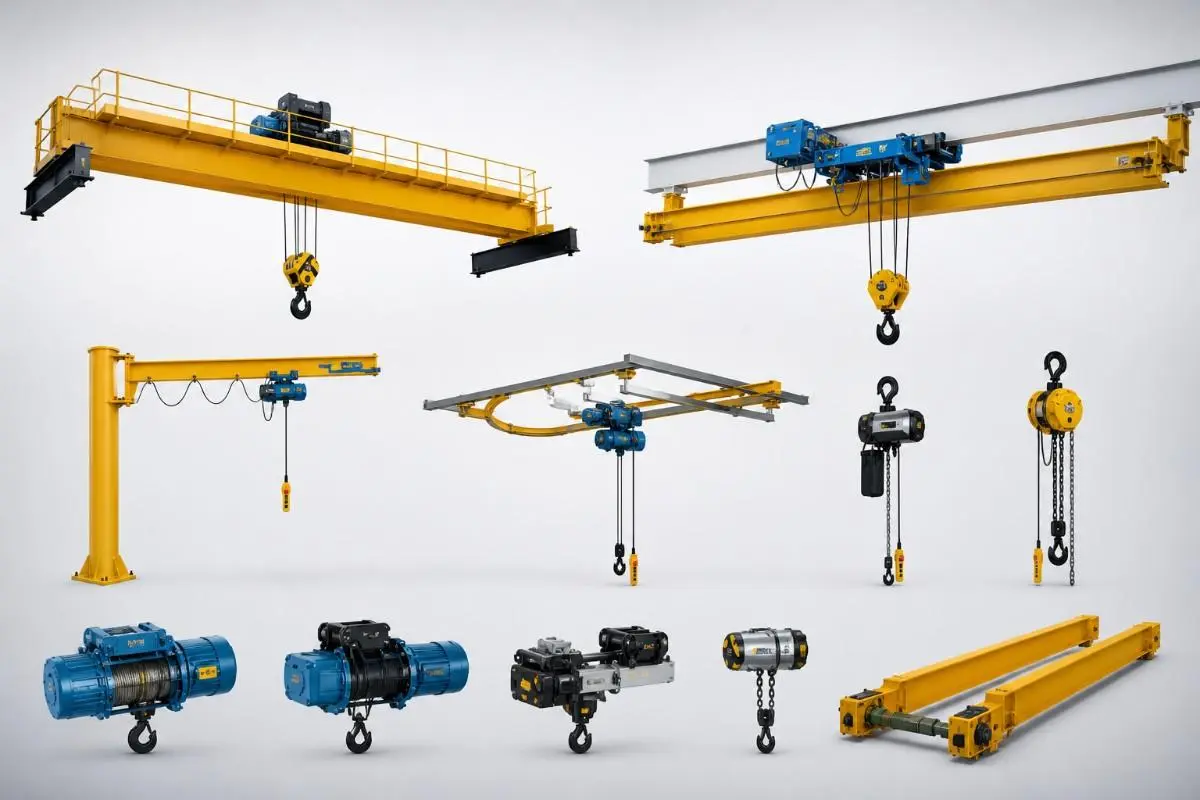
Have you ever considered how a small installation error could affect an entire factory's lifting operations? Installing an Electric Overhead Travelling (EOT) crane involves more than assembling equipment and connecting electrical components. Every stage, from evaluating the building structure to aligning the runway rails, plays an important role in achieving safe and reliable operation. Even minor oversights during installation can lead to equipment wear, unexpected downtime, and expensive corrections.
Choosing experienced EOT crane manufacturers in Chennai and following proper installation practices can help industries avoid these challenges. Here are eight common EOT crane installation mistakes that businesses should understand before setting up their lifting equipment.
The significant loading on the building structure from an EOT crane is via the runway beams, columns and supporting connections. Without an evaluation of the building's load-bearing capacity before installation, the building could be under stress or deformation. Existing industrial buildings need special consideration due to a design that may have not considered the extra load a new crane system would impose on the building. A structural assessment can be used to figure out whether reinforcement or modifications may be required prior to the installation process.
"A successful crane installation begins with precise planning and ends with dependable performance."
EOT crane is dragged by rails on the runway which guides the crane movement. Rail misalignment can lead to unequal wheel loading; higher friction; abnormal vibration and wear on mechanical parts. The movement of the crane and its operating performance may be influenced by any deviation in rail level, spacing or straightness, even if it is a very small one. Therefore, prior to the crane's operation, accurate measurements and alignment checks are essential for ensuring the crane's smooth and precise operation.
Choosing the crane just based on the heaviest load in the factory at the time of selection may lead to limitations in operations. The crane's lifting capacity needs to be sufficient for the intended lift, use of attachments, load type and frequency of use. You can end up with a crane that isn't big enough to carry the job, or one that is too large to be necessary for the job, so this can cause installation and operation costs to rise. The selection of capacity should be based on documented evaluation of the actual lifting needs of the facility.
The electrical system is critical to the operation of an EOT crane, as it provides the power and control necessary to move the crane, operate its motors, and ensure that the crane is designed correctly. The problem can occur when the power supply, cable configuration, control circuits or earthing is inappropriate for the equipment. Poor electrical planning can result in problems during operation, such as electrical interruptions, erratic movement, and electrical safety issues. Before installing, electrical requirements should be checked, not after.
Safety devices are used to minimize unsafe operating conditions and potential equipment damage. When essential protective features are not installed, are installed incorrectly or are not tested, the crane may not perform as intended in abnormal situations. These can be travel limit switches, overload protection, emergency stop, brakes, anti-collision systems etc., depending on the crane design and application. All of the applicable devices should be installed and checked as per design requirement and related safety guideline.
An EOT crane is made of multiple mechanical, electrical and structural components that operate in unison. The crane may also experience unpredictable movement or problems if the bridge, end carriages, hoist, trolley, motors and control systems are mismatched. It is particularly important that components are compatible when equipment is sourced from various manufacturers or when a crane is changed from one manufacturer to another or modified. Before installation, checking the entire system allows for identification of mismatches at an early stage.
Being physically installed does not indicate that an EOT crane is ready for normal production operation. Commissioning checks are required to ensure that the equipment is delivering the functions and operates as intended, and that the safety systems are working. These checks may be ignored, which could result in installation problems, incorrect settings or control issues without being noticed. Testing must be performed by competent persons following manufacturer's procedures and relevant regulations.
Planning for maintenance should start at installation and not when the crane is in service. If there are no inspection schedules, maintenance records, spare parts arrangements and operating instructions, facility teams can find it difficult to ensure the equipment is maintained in good condition. Likewise, without proper documentation, it can also be hard to determine if any parts are worn or if the required services have been performed. This is a good handover as it provides the necessary information to the maintenance team for the life of the crane.
Also Read This:What Makes an EOT Crane Ready for Real-World Industrial Demands?
A successful EOT crane installation depends on the details that are often overlooked, from structural compatibility and rail alignment to electrical integration and commissioning checks. Addressing these factors before the crane enters service can help industries avoid preventable disruptions, control maintenance expenses, and maintain safer material-handling operations. Working with experienced EOT Crane Manufacturers in Chennai can help businesses identify suitable crane configurations and follow installation practices that match their facility requirements. Make careful planning your first step towards dependable lifting performance and long-term equipment reliability.
Common mistakes include ignoring building load capacity, incorrect runway rail alignment, choosing the wrong crane capacity, overlooking electrical requirements, and skipping safety inspections.
Structural assessment confirms whether the building columns, runway beams, connections, and foundations can safely support the crane and its operating loads.
Misaligned rails can cause uneven wheel loading, excessive friction, vibration, and premature wear on crane components, potentially increasing maintenance requirements.
Load testing, where required, helps verify the crane's performance and structural behaviour under prescribed conditions before it enters regular operation.
Industries should evaluate technical expertise, crane design capabilities, component quality, compliance with applicable safety requirements, installation support, and after-sales service.
One of the top Crane Manufacturers in Chennai is MH Cranes & Hoists. We are known to be leading manufacturers of EOT Crane, Electric Hoist, Electric Wire Rope Hoist, Electric Chain Hoist, Single Girder EOT Crane, Double Girder EOT Crane, Gantry Crane, JIB Crane, Portable Crane, Underslung Crane, Light Crane System, Standard Electric Wire Rope Hoist, MWH Series Wire Rope Hoist, Standard Budgetary Hoist, Light Duty Hoist, Ultra Low Head Room Hoist, Electric Winch, Engineering Crane Manufacturers in Chennai.
© 2024 Mh Cranes & Hoists. All Rights Reserved. Design and Developed By 


